
 | Consultation hotline 86-13566885263 |


| Consultation hotline 86-13566885263 |

Sales Hotline: 86-0576-88224372
Mobile phone: 86-13906597993 / 86-13566885263
Address: Building 55, Feiyue Science and Technology Innovation Park, Jiaojiang District, Taizhou City, Zhejiang Province
Fax: 86-0576-88811172
Website: www.tzoutuo.com
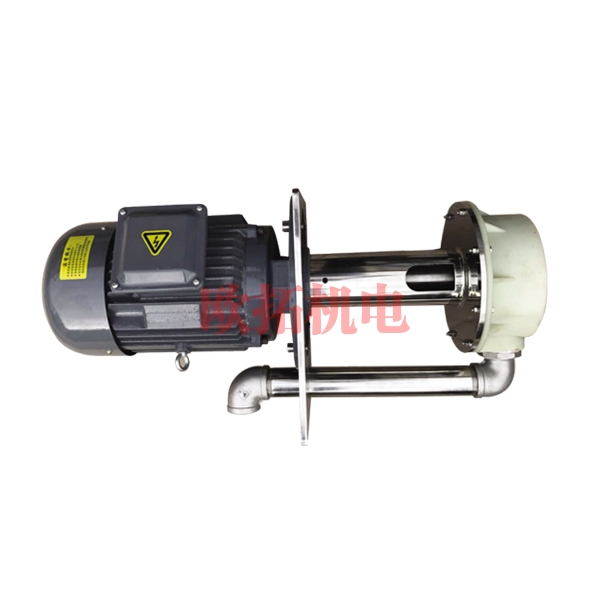
The sand pump is mainly used to support the circulating solid control system of oilfield drilling RIGS. Its function is to provide drilling fluid with a certain displacement and pressure to desanders, desilters, slurry mixing devices, etc. Therefore, it is of great significance to do a good job in the maintenance and care of the sand pump. This not only extends the service life of the sand pump and improves its efficiency, but more importantly, it ensures the normal and efficient operation of the entire circulation system.
Detailed instructions for each step in the maintenance process of the sand pump
Disassembly
Remove the packing gland, take off the pump casing, and remove the impeller. First, use a wrench to remove the impeller nut. Pay attention to striking the rear ribs of the impeller with wooden spacers and hammers, then withdraw the impeller, remove the guard plate, withdraw the auxiliary impeller, unload the packing box, and withdraw the polyurethane skeleton oil seal, spacer ring and packing from the packing cavity. To withdraw the shaft sleeve, if it is too tight, you can strike its tail with a wedge-shaped block to loosen it. Remove the bearing cover, take out the lock nut and lock washer, and place a copper rod or wooden block on the shaft end. From left to right, take out the shaft and bearing components from the bracket.
"Check
When inspecting the impeller, if there is severe cavitation, excessive corrosion, abrasion or damage, the impeller should be replaced. When the radial runout exceeds 0.05mm, the oil seal position is severely scratched, and the threads, grooves, steps and other surfaces on the shaft are damaged, the shaft should be repaired. If it cannot be repaired, the shaft should be replaced. When the surface of the bushing is rough or severely damaged, it should be replaced. The oil seal that has been disassembled must also be replaced. Inspection of ball bearings: Bearings that are excessively worn, too tight or too loose during operation, or make noise must be replaced. (New bearings can only be opened during replacement, and the replaced bearings must be of the same model and size as the original bearings used in the pump.) The inspection of O-rings: Generally, the O-rings that have been disassembled should be replaced. For other sealing gaskets, etc., as long as there is no damage, they can be reused.
Assembly
All parts must be cleaned before assembly, especially the threads, bearings and lubrication parts of the bearings, which should be carefully cleaned. For some rough parts, fine sandpaper should also be used for grinding. First, install the thrust bearing at the power end. The two bearings should be installed back-to-back. After tightening the lock nuts, the lock gasket should be fastened. When installing the shaft sleeve, apply a thin layer of anti-friction agent on the shaft and then install the stuffing box. Install the auxiliary impeller. Install the impeller. The gap between the back of the impeller and the guard plate should be 0.6mm. The packing gland should not be tightened too much; otherwise, the packing may burn out during the operation of the pump. The assembly sequence should be carried out in the reverse direction of disassembly. After assembly, when turning the shaft by hand, it should be flexible and there should be no jamming at any part.
Technical support: